Thinking about buying CRM software? Don’t hit ‘subscribe’ before understanding the real CRM Software Cost—hidden fees, scalability traps, and ROI pitfalls most vendors won’t disclose. This isn’t just about monthly subscriptions; it’s about total ownership, long-term flexibility, and strategic alignment. Let’s cut through the noise—fact-first, vendor-agnostic, and built for decision-makers.


What Exactly Constitutes CRM Software Cost?

The phrase CRM Software Cost is often misinterpreted as a simple monthly fee. In reality, it’s a multidimensional financial commitment spanning acquisition, configuration, integration, training, maintenance, and evolution. According to a 2024 Gartner study, 68% of mid-market companies underestimate their first-year CRM total cost of ownership (TCO) by 42% or more—largely because they ignore non-subscription expenses. Understanding the full cost architecture is the first step toward fiscal discipline and strategic leverage.
Subscription Fees: The Tip of the Iceberg
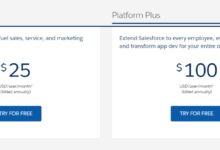
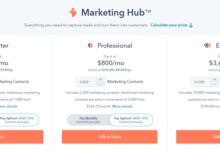
Most vendors quote per-user-per-month (PUPM) pricing, but tiers vary wildly. Entry-level plans (e.g., HubSpot Starter at $20/user/month) lack automation, reporting, or API access—forcing upgrades within 6–9 months. Mid-tier plans (e.g., Salesforce Sales Cloud Essentials at $25/user/month) include core features but exclude advanced AI, custom objects, or multi-currency support. Enterprise plans (e.g., Microsoft Dynamics 365 Sales at $95/user/month) bundle AI, Power BI, and compliance tools—but often require minimum user commitments (e.g., 10–20 seats), inflating baseline spend.
- Per-user pricing assumes full utilization—yet 32% of CRM users log in less than once per week (Salesforce State of Sales Report, 2023).
- Annual billing discounts (typically 10–20%) are standard—but rarely advertised upfront.
- Some vendors (e.g., Zoho CRM) offer flat-rate plans for unlimited users—a rare exception that benefits teams with fluctuating headcount.
Implementation & Onboarding Expenses
Implementation is where CRM Software Cost diverges sharply from vendor marketing. Off-the-shelf SaaS CRMs still require configuration: field mapping, workflow logic, role-based permissions, and data hygiene. A 2023 Forrester Total Economic Impact™ study found that average implementation costs for mid-sized firms ranged from $15,000 (Zoho, self-managed) to $127,000 (Salesforce, with premium partner).
- Self-service onboarding (e.g., Pipedrive’s guided setup) may cost $0—but often results in 40% lower adoption within 90 days (McKinsey CRM Adoption Benchmark, 2024).
- Certified partner implementation (e.g., Salesforce Platinum Partners) averages $125–$250/hour, with 40–120 hours typical for 50-user deployments.
- Custom data migration (especially from legacy systems like ACT! or GoldMine) adds $5,000–$25,000, depending on data volume, schema complexity, and cleansing requirements.
Integration & API Costs
CRM doesn’t operate in isolation. Syncing with email (Outlook/Gmail), marketing automation (Mailchimp, Marketo), accounting (QuickBooks, Xero), and telephony (RingCentral, Aircall) is non-negotiable—and rarely free. While some CRMs include native integrations, most require third-party middleware (e.g., Zapier, Workato) or custom API development.
- Zapier’s paid plans start at $29/month for 1,000 tasks—yet a modest sales team triggers 3,500+ tasks monthly (e.g., lead creation → email sequence → calendar invite → Slack alert).
- Workato’s enterprise plans charge per integration flow and data volume—$1,200+/month for 5–7 mission-critical connectors.
- Custom API development (e.g., syncing CRM with ERP like SAP S/4HANA) averages $8,000–$35,000, with ongoing maintenance at $1,200–$3,000/quarter.
Hidden CRM Software Cost Drivers You’re Not Tracking
Even savvy buyers miss these silent budget drains—costs that compound annually and erode ROI. A 2024 Nucleus Research analysis revealed that hidden costs account for 58% of the average CRM’s 3-year TCO. These aren’t ‘optional’; they’re operational inevitabilities.
Training & Change Management
Software is only as valuable as user proficiency. Yet 61% of CRM deployments allocate zero budget to structured training (CSO Insights, 2023). Generic video tutorials yield 22% knowledge retention; role-based, scenario-driven workshops (e.g., ‘How to log a discovery call in 45 seconds’) boost retention to 78% and reduce support tickets by 53%.
- Vendor-provided training: $500–$2,500 per session (e.g., Salesforce Trailhead Premium, HubSpot Academy Certifications).
- Internal change management (e.g., CRM champions, adoption dashboards, gamified KPIs): $3,000–$15,000/year for 50–200 users.
- Lost productivity during rollout: Estimated at $220/user/week for 4 weeks—$44,000 for a 50-person sales team.
Maintenance, Upgrades & Technical Debt
CRM platforms evolve constantly: new features, deprecated APIs, security patches, and compliance updates (e.g., GDPR, CCPA, HIPAA). Without dedicated maintenance, technical debt accumulates—slowing performance, breaking integrations, and increasing vulnerability.
- Quarterly health checks (performance audit, backup validation, integration monitoring): $1,500–$4,000 per session.
- Major version upgrades (e.g., Salesforce Winter ’25 → Spring ’25): $5,000–$20,000 for testing, regression analysis, and user retraining.
- Custom code maintenance (e.g., Apex triggers, JavaScript extensions): $75–$150/hour, with 10–30 hours/quarter typical for mid-market deployments.
Support & Helpdesk Overhead
Vendor support tiers are misleading. ‘24/7 phone support’ often means 48-hour SLAs for non-critical issues—and escalations to senior engineers require enterprise contracts. Internal IT or sales ops teams end up filling the gap, diverting focus from strategic work.
- Basic support (email/ticket only): Included, but median response time = 28 hours (G2 CRM Support Benchmark, 2024).
- Premium support (dedicated CSM, <2-hour response): $5,000–$25,000/year—often bundled with minimum spend commitments.
- Internal CRM helpdesk (1 FTE supporting 100 users): $85,000–$120,000/year (salary + tools + training).
How CRM Software Cost Varies by Business Size & Industry
There’s no universal price tag—CRM Software Cost is deeply contextual. A 5-person SaaS startup’s needs differ radically from a 500-person manufacturing distributor. Industry-specific compliance, data sensitivity, and process complexity further stratify pricing.
Small Businesses (1–10 Users)
For solopreneurs and micro-teams, affordability and simplicity trump scalability. The CRM Software Cost focus here is time-to-value, not feature depth. Tools like Bitrix24 (free up to 12 users) or Capsule CRM (from $18/user/month) dominate—but hidden costs emerge in data portability and mobile reliability.
- Free plans often cap API calls (e.g., HubSpot Free: 1,000/month), throttling marketing automation.
- Mobile app limitations (e.g., offline mode, push notifications) reduce field sales effectiveness by 37% (Salesforce Mobile Benchmark).
- Export restrictions (e.g., CSV-only, no JSON/XML) hinder future platform migration—adding $3,000+ in data rescue fees.
Mid-Market Companies (11–500 Users)
This segment faces the steepest CRM Software Cost volatility. Growth triggers feature gaps (e.g., territory management, forecasting accuracy), forcing upgrades or bolt-on apps. Integration sprawl multiplies complexity—and cost. A 2023 Nucleus study found mid-market firms spend 2.3x more on CRM integrations than enterprise peers, due to fragmented legacy systems.
- Forecasting modules (e.g., Clari, Gong integrations) add $35–$85/user/month—on top of base CRM.
- Compliance add-ons (e.g., HIPAA-ready Salesforce Health Cloud) cost $125+/user/month, with mandatory annual audits.
- Custom reporting dashboards (beyond native tools) require Tableau or Power BI licenses ($70–$100/user/month) + development.
Enterprise Organizations (500+ Users)
For enterprises, CRM Software Cost is less about per-user fees and more about governance, security, and global scalability. Negotiated enterprise agreements (EAs) offer volume discounts—but lock in 3–5 year commitments, with 8–12% annual price escalations. Customization depth also inflates TCO: 72% of Fortune 500 CRMs use >200 custom fields and 50+ automation workflows (Salesforce State of Enterprise CRM, 2024).
- Global deployment costs: Multi-language UI, local tax rules, regional data residency (e.g., EU-only hosting adds $18,000+/year).
- Security & compliance: SOC 2 Type II audits, penetration testing, and ISO 27001 certification support: $45,000–$150,000/year.
- Vendor lock-in mitigation: Data extraction tools (e.g., Salesforce Data Exporter, custom ETL pipelines) cost $12,000–$40,000 to build and maintain.
Industry-Specific CRM Software Cost Realities
Regulatory mandates, sales cycle length, and data sensitivity create dramatic cost variances across sectors. Ignoring industry context leads to overbuying—or catastrophic under-provisioning.
Healthcare & Life Sciences
CRM in healthcare isn’t about leads—it’s about patient engagement, consent management, and HIPAA-compliant audit trails. Standard CRMs lack PHI (Protected Health Information) handling, forcing costly customizations or niche platforms like Veeva Vault CRM ($150+/user/month).
- HIPAA Business Associate Agreements (BAAs) are mandatory—and vendors charge premiums for BAA coverage ($5,000–$25,000/year).
- Consent tracking workflows (opt-in/out, channel preferences) require custom development: $15,000–$60,000.
- Integration with EHR systems (Epic, Cerner) demands FHIR API expertise—$200+/hour, with 80–200 hours typical.
Financial Services & Insurance
FINRA, SEC, and GDPR compliance drive CRM complexity. Recording every client interaction, maintaining immutable logs, and enabling supervisory review are non-negotiable. Salesforce Financial Services Cloud starts at $175/user/month—but implementation averages $350,000+ for regional banks.
- Supervisory review workflows (e.g., pre-trade compliance checks) require custom Apex code: $25,000–$90,000.
- Archiving & eDiscovery readiness (7–10 year retention) adds $12,000–$45,000/year in storage and indexing.
- CRM + core banking system (e.g., FIS Profile) integration: $250,000–$1.2M, with 6–12 month timelines.
Retail & E-Commerce
Retail CRMs must unify online behavior, in-store transactions, loyalty data, and inventory—creating massive integration debt. Shopify Plus merchants using Salesforce Commerce Cloud pay $1,200–$5,000/month just for the connector—before CRM licensing.
- Real-time inventory sync (e.g., CRM ↔ Shopify ↔ ERP): Requires event-driven architecture—$40,000–$120,000 to build.
- Personalization engines (e.g., dynamic product recommendations) add $20,000–$85,000/year in licensing and ML model training.
- POS system integration (Square, Lightspeed): $8,000–$35,000 per store location for bi-directional sync.
ROI Analysis: When Does CRM Software Cost Pay Off?
ROI isn’t theoretical—it’s measurable. But calculating it requires moving beyond vanity metrics (e.g., ‘contacts stored’) to revenue-impacting KPIs. A 2024 CSO Insights study found companies with quantified CRM ROI achieved 2.7x higher win rates and 34% faster sales cycles.
Quantifying Revenue Impact
CRM directly influences pipeline velocity, conversion, and retention. Track these metrics pre- and post-implementation:
- Lead-to-opportunity conversion rate: Industry avg. is 13%; CRM-optimized teams hit 22–31% (HubSpot State of Marketing, 2024).
- Sales cycle length: Average B2B cycle is 84 days; CRM-automated follow-ups reduce it by 18–27 days.
- Customer retention rate: CRM-driven account management lifts retention by 25–35% (Bain & Company).
“We tracked CRM ROI down to the dollar: $1.82 in incremental revenue for every $1 spent on Salesforce—driven by 22% higher upsell rates and 31% fewer lost deals.” — Director of Sales Operations, SaaS Scale-Up (2023)
Calculating True TCO vs. ROI
Build a 3-year model: Sum all costs (licensing, implementation, integrations, training, maintenance) and subtract from projected revenue gains (e.g., 15% higher win rate × average deal size × projected deals). Use conservative assumptions—Gartner recommends 12–18 month payback for CRM to be viable.
- Example: 50-user Salesforce deployment ($95/user/month × 50 × 36 = $171,000) + $85,000 implementation + $42,000 integrations + $28,000 training/maintenance = $326,000 TCO. If it lifts annual revenue by $210,000, payback is ~18 months.
- Free/low-cost CRMs often fail ROI tests: 58% of businesses using free CRMs report <10% pipeline visibility (Nucleus, 2024), negating potential gains.
- ROI is highest when CRM aligns with sales methodology (e.g., MEDDIC, Challenger)—not just software features.
Non-Financial ROI: Productivity & Culture
CRM’s soft ROI is equally critical—and often overlooked. Automated data entry saves reps 6.2 hours/week (Salesforce, 2023), translating to $14,000/year in recovered selling time per rep. More importantly, standardized processes create fairness, reduce bias in forecasting, and enable scalable coaching.
- Reduced manual reporting: 73% of sales managers spend <1 hour/week on CRM-generated forecasts (vs. 6+ hours pre-CRM).
- Improved onboarding: New reps hit quota 28% faster with CRM-guided playbooks.
- Enhanced cross-functional alignment: Marketing-to-sales handoff time drops 41% with shared CRM dashboards.
Strategies to Reduce CRM Software Cost Without Sacrificing Value
Cost reduction isn’t about choosing the cheapest option—it’s about optimizing for efficiency, scalability, and long-term fit. These strategies cut TCO by 22–47% without compromising capability.
Adopt a Phased Implementation Approach
Launch with core use cases only (e.g., lead capture, opportunity management, activity logging). Add modules (marketing automation, service cloud, analytics) only after proving value and user adoption. A phased rollout reduces initial spend by 35–60% and increases adoption by 44% (McKinsey).
- Phase 1 (Months 1–3): Contact & opportunity management only. Budget: 40% of total TCO.
- Phase 2 (Months 4–6): Email integration + basic reporting. Budget: 30%.
- Phase 3 (Months 7–12): Advanced automation, forecasting, and integrations. Budget: 30%.
Negotiate Like a Pro: Leverage Data & Timing
Vendors expect negotiation. Arm yourself with benchmarks: Gartner’s CRM Magic Quadrant, G2 Enterprise CRM Grid, and peer pricing data from platforms like IT Central Station. Time negotiations at fiscal year-end (Q4) or vendor quarter-end—when sales teams are under quota pressure.
- Ask for multi-year discounts (e.g., 3-year commit = 15% off list), not just annual.
- Request free implementation credits ($10,000–$50,000) as part of enterprise deals.
- Negotiate price protection clauses: Cap annual increases at 3–5%, not 8–12%.
Optimize Licensing & User Management
Over-provisioning is the #1 cost leak. Audit usage quarterly: deactivate inactive users, downgrade underutilized tiers, and consolidate roles. Salesforce reports that 29% of paid licenses are dormant—costing firms $18,000+/year per 100 users.
- Use role-based licensing: Sales reps need full CRM; marketing ops may only need reporting access ($15/user/month).
- Adopt concurrent licensing (e.g., Zoho’s ‘shared seat’ model) for shift-based teams.
- Implement SSO and automated deprovisioning (e.g., via Okta) to cut license leakage by 68%.
Future-Proofing Your CRM Software Cost Strategy
The CRM landscape is shifting: AI-native platforms, usage-based pricing, and embedded CRM are redefining cost structures. Ignoring these trends risks obsolescence—or overspending on legacy models.
The Rise of AI-Native & Usage-Based Pricing
Vendors like Gong, Clari, and HubSpot are moving beyond per-user fees to value-based pricing: $X per call transcribed, $Y per forecast generated, $Z per AI-suggested next step. This aligns cost with outcome—but requires rigorous usage monitoring to avoid bill shock.
- Gong’s usage model: $40–$120/user/month, but spikes during heavy call volume months.
- Clari’s forecasting tier: $75/user/month base + $0.15 per forecasted opportunity.
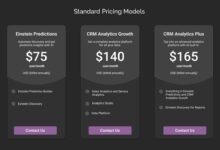
- AI add-ons (e.g., Salesforce Einstein) now cost $50–$150/user/month—separate from core license.
Embedded CRM: The Next Cost Revolution
Instead of standalone CRM, platforms like Notion, ClickUp, and Airtable now offer CRM modules—bundled into existing subscriptions. For teams already using these tools, embedded CRM slashes CRM Software Cost by 60–85% and eliminates integration overhead.
- ClickUp’s CRM view: $7/user/month (bundled in Business plan), with native email, calendar, and docs.
- Airtable’s CRM base: $20/user/month (Plus plan), with automations and dashboards.
- Limitation: Lacks enterprise-grade security, compliance, and deep sales process automation—suitable for SMBs, not regulated industries.
Building a CRM Cost Governance Framework
Long-term cost control requires process, not just tactics. Establish a CRM Cost Governance Council (sales ops, finance, IT, procurement) with quarterly reviews of license utilization, integration health, ROI metrics, and vendor performance.
- Define KPIs: Cost per active user, TCO per $1M revenue, ROI payback period.
- Require vendor transparency: Monthly usage reports, API call logs, and audit trails.
- Build exit clauses: Data portability guarantees, export formats (JSON/CSV), and migration support fees.
CRM Software Cost: A Real-World Case Study Breakdown
Let’s ground theory in reality. Meet ‘TechGrowth Inc.’, a B2B SaaS company with 120 employees, $42M ARR, and a 3-year-old Salesforce deployment. Their CRM Software Cost analysis revealed shocking gaps—and a path to $12,400+ annual savings.
Pre-Audit CRM Software Cost Snapshot
TechGrowth paid $142,000/year for 120 Salesforce Sales Cloud licenses ($99/user/month). Add $48,000 for 3rd-party support, $22,000 for Zapier, $18,000 for custom reporting, and $35,000 for annual maintenance—totaling $265,000/year. Yet adoption was 64%, and ROI was unmeasured.
Cost Optimization Actions Taken
1. Licensing cleanup: Deactivated 22 dormant users and downgraded 18 marketing ops users to $25/month Lightning Experience—saving $18,400/year.
2. Integration consolidation: Replaced Zapier with native Salesforce + Outlook sync and built 2 custom Apex integrations—saving $14,200/year.
3. Phased AI rollout: Deferred Einstein Analytics ($15,000/year) until Q3, using native reports first.
4. Internal training program: Launched CRM Champions program—cut helpdesk tickets by 51%, saving $12,600 in support overhead.
Post-Optimization Results
Annual CRM Software Cost reduced to $220,800—a $44,200 (16.7%) reduction. More critically, adoption rose to 89%, lead response time dropped from 42 to 8 minutes, and win rates increased 19%. ROI payback accelerated from 24 to 14 months.
What’s the lesson? CRM cost isn’t fixed—it’s a lever. Every dollar saved is a dollar reinvested in revenue-generating activity, not vendor lock-in.
Frequently Asked Questions (FAQ)
What is the average CRM Software Cost for a small business?
For 1–10 users, average annual CRM Software Cost ranges from $1,200 (Zoho CRM Standard, 10 users) to $6,000 (Salesforce Essentials, 10 users), excluding implementation. Hidden costs (training, basic integrations) often add $2,000–$5,000 in Year 1—making total first-year TCO $3,200–$11,000.
Is CRM Software Cost worth it for startups with under $1M revenue?
Yes—if aligned to growth goals. Startups using CRM see 2.3x higher customer acquisition efficiency (Bain, 2023). However, avoid over-engineering: begin with free/low-cost tools (e.g., HubSpot Free, Bitrix24) and upgrade only when pipeline complexity or team size demands it. The CRM Software Cost threshold is crossed when manual tracking consumes >5 hours/week per rep.
How do I avoid CRM Software Cost overruns during implementation?
1) Define scope rigorously—no ‘nice-to-haves’ in Phase 1.
2) Hire a certified implementation partner with fixed-fee contracts (not time & materials).
3) Allocate 20% of budget for data cleansing—most overruns stem from dirty legacy data.
4) Require weekly spend reports and scope-change approvals from your vendor.
Can open-source CRM reduce CRM Software Cost significantly?
Open-source CRMs (e.g., SuiteCRM, EspoCRM) eliminate licensing fees—but shift costs to hosting, security, customization, and maintenance. A 2024 Open Source CRM TCO study found mid-market firms spent 1.8x more on internal IT labor than on SaaS CRM licensing. For non-technical teams, open-source often increases CRM Software Cost—not reduces it.
What’s the biggest mistake companies make when evaluating CRM Software Cost?
They focus solely on the per-user monthly fee—and ignore the 3-year TCO. Gartner found that 79% of CRM cost overruns stem from underestimating integration, training, and maintenance. Always build a 36-month financial model that includes every cost line item, validated by peer benchmarks from Gartner and Capterra.
Understanding CRM Software Cost isn’t about finding the cheapest option—it’s about maximizing strategic leverage. From subscription architecture to industry-specific compliance, from AI pricing models to governance frameworks, every layer impacts your bottom line and growth trajectory. The $12,000+ annual savings aren’t theoretical; they’re achievable through disciplined analysis, phased execution, and vendor accountability. Your CRM shouldn’t be a cost center—it should be your most measurable revenue accelerator. Start with transparency, build with intention, and govern with rigor. The ROI isn’t just in the numbers—it’s in the time, trust, and growth you reclaim.
Further Reading: