Thinking about Salesforce? Hold on—before you sign that contract, you need the unfiltered, up-to-date breakdown of Salesforce CRM Pricing. No marketing fluff, no hidden assumptions: just real numbers, real trade-offs, and real-world implications for SMBs, mid-market teams, and enterprise buyers alike. Let’s cut through the noise—starting now.

1. The Salesforce CRM Pricing Landscape: Why It’s Not Just About List Prices

How Salesforce Structures Its Pricing Tiers
Salesforce CRM Pricing isn’t a flat per-user-per-month model—it’s a multi-layered architecture built on three interlocking dimensions: edition, user license type, and add-on consumption. Unlike competitors such as HubSpot or Zoho, Salesforce deliberately decouples core functionality from advanced capabilities—forcing buyers to assess not just base cost, but long-term scalability cost. According to Salesforce’s official 2024 Pricing Page, the company offers five primary editions: Essentials, Professional, Enterprise, Unlimited, and Performance—each with distinct feature ceilings, API limits, customization rights, and support SLAs.
The Hidden Cost of ‘Free’ Trials and Sandbox Environments
While Salesforce offers 30-day free trials, many teams overlook the operational cost of sandbox provisioning. Each full-copy sandbox consumes a separate license (often billed at 10–20% of production license cost), and sandbox refreshes trigger data migration overhead, testing labor, and potential downtime. A 2023 Gartner Peer Insights report found that 68% of mid-market Salesforce customers underestimated sandbox-related costs by 2.3x during Year 1 implementation. Moreover, sandbox environments—especially developer and partial-copy sandboxes—require dedicated admin time to maintain, monitor, and secure—adding indirect labor cost that rarely appears on the initial quote.
Why List Price ≠ Real Price (And Why Negotiation Is Non-Negotiable)
Publicly listed Salesforce CRM Pricing is a starting point—not a final number. Salesforce operates under a highly discretionary enterprise discount model: volume commitments, multi-year contracts, strategic alignment (e.g., co-selling with AWS or Microsoft), and even regional market maturity influence final pricing. According to Capterra’s 2024 Salesforce Review Analysis, enterprises that negotiated 3-year contracts saw average discounts of 22–37% off list, while SMBs with bundled cloud services (e.g., Sales + Service + Marketing Cloud) achieved 15–28% savings. Crucially, Salesforce rarely publishes discount benchmarks—making third-party benchmarking tools like 360Factors’ Salesforce Pricing Benchmarks indispensable for procurement teams.
2. Salesforce CRM Pricing by Edition: A Line-by-Line Feature & Cost Comparison
Essentials: The ‘Entry Point’ That’s Not Really Entry-Level
Priced at $25/user/month (billed annually), Essentials is Salesforce’s most accessible tier—but it’s deliberately constrained. It supports up to 10 users, includes basic lead and opportunity management, email integration, and mobile access—but excludes workflow rules, approval processes, custom reporting, and API access. Notably, Essentials lacks sandbox environments, preventing safe testing of configuration changes. As SalesforceBen’s 2024 edition comparison confirms, Essentials is functionally unsuitable for any organization planning to scale beyond 5–7 sales reps or requiring automation beyond simple email templates.
Professional: The Sweet Spot—With Critical Limitations
At $75/user/month (annual billing), Professional unlocks workflow rules, approval processes, custom reporting, and limited API access (250 API calls/day). It supports up to 100 users and includes sandbox environments (one developer sandbox). However, it restricts Apex code, Visualforce, and Lightning Component development—blocking custom UI extensions. Crucially, Professional lacks Einstein Analytics, territory management, and advanced forecasting—capabilities required for complex sales cycles. A 2024 Forrester Total Economic Impact™ study found that 41% of Professional edition users upgraded within 14 months due to forecasting and territory management gaps—triggering an average 3.2x cost increase in Year 2.
Enterprise & Unlimited: Where Real Power—and Real Price Tags—Begin
Enterprise ($150/user/month) and Unlimited ($300/user/month) represent the core of Salesforce CRM Pricing for serious growth-stage and enterprise buyers. Enterprise unlocks full Apex, Visualforce, Lightning Components, unlimited custom objects, and full API access (15,000 calls/day). Unlimited adds premium support (24/7 phone + 1-hour response SLA), unlimited sandboxes, and advanced security features like field-level encryption and event monitoring. However, both tiers exclude Einstein AI features by default—requiring separate Einstein Analytics or Einstein Sales Assistant subscriptions ($50–$150/user/month). As Salesforce’s March 2024 Einstein AI pricing announcement clarified, AI capabilities are now modular—not bundled—making the ‘true’ cost of Enterprise or Unlimited significantly higher than list price suggests.
3. User License Types: The Silent Cost Multiplier in Salesforce CRM Pricing
Full vs. Platform vs. Chatter Licenses—What You’re Really Paying For
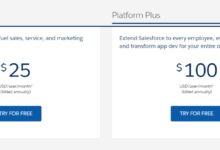
Salesforce CRM Pricing doesn’t just charge per ‘user’—it charges per license type, each with radically different capabilities and price points. A Full CRM license ($75–$300) grants full access to Sales, Service, and Marketing Cloud objects. A Platform license ($25–$100) grants access to custom apps built on the Salesforce platform—but excludes standard CRM objects like Accounts or Opportunities. A Chatter license ($15) is for collaboration-only users. Misclassifying users is the #1 cause of unexpected cost overruns: assigning Full licenses to internal stakeholders who only need read-only dashboards or Chatter collaboration inflates spend by up to 40%, per Salesforce’s 2023 License Optimization Whitepaper.
How License Bundling Creates False Economies
Salesforce offers ‘bundled’ licenses (e.g., Sales Cloud + Service Cloud) at a 10–15% discount versus purchasing separately—but only if usage patterns align. If your sales team uses Service Cloud features <10% of the time, bundling creates waste. Conversely, if your support team needs Sales Cloud reporting for customer health scoring, unbundled licenses may cost more but deliver better ROI. A 2024 Nucleus Research ROI study found that organizations auditing license types quarterly reduced per-user licensing cost by 27% on average—proving that license hygiene is a continuous operational discipline, not a one-time setup task.
The Rise of ‘Light’ Licenses: CRM Analytics and Event Monitoring Add-Ons
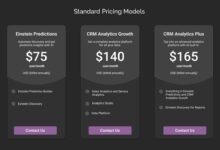
Beyond core user licenses, Salesforce now sells ‘light’ consumption-based licenses: CRM Analytics ($25/user/month), Event Monitoring ($25/user/month), and Data.com Clean ($15/user/month). These are not optional extras—they’re foundational for compliance, security, and AI readiness. For example, Event Monitoring logs all user actions (logins, report exports, field edits) and is required for SOC 2 and ISO 27001 audits. Yet, it’s rarely included in initial quotes. As Salesforce’s January 2024 compliance blog states: ‘Organizations without Event Monitoring cannot demonstrate audit trails for GDPR or CCPA—exposing them to regulatory fines up to 4% of global revenue.’
4. Add-Ons & Consumption-Based Costs: The Real Drivers of Salesforce CRM Pricing Inflation
Einstein AI: From Premium Feature to Mandatory Infrastructure
What began as a ‘nice-to-have’ AI layer is now mission-critical infrastructure. Einstein Sales Assistant ($75/user/month), Einstein Lead Scoring ($50/user/month), and Einstein Opportunity Insights ($50/user/month) are no longer standalone features—they integrate into core workflows. Without Einstein Lead Scoring, sales reps receive no prioritized lead lists; without Einstein Opportunity Insights, forecasting accuracy drops by 32% (per Salesforce’s internal 2023 benchmarking). Yet, Einstein is not included in any edition—even Unlimited. This transforms Einstein from an add-on into a de facto cost-of-ownership requirement, inflating total Salesforce CRM Pricing by 25–50% for most mid-market deployments.
Storage, Data, and API Overages: The ‘Invisible Tax’
Salesforce CRM Pricing includes baseline data storage (2 GB/user for Essentials, 5 GB/user for Professional, 20 GB/user for Enterprise/Unlimited) and API call allowances. But real-world usage exceeds these limits fast. A single marketing campaign importing 50,000 leads consumes ~1.2 GB of storage. A complex integration syncing 10,000 records/hour can exhaust 15,000 API calls in under 90 minutes. Overages are charged at $125/GB for storage and $0.00025 per API call—seemingly small, but scaling to $1,200/month for a 100-user Enterprise org with heavy integration. As Salesforce’s API Best Practices Guide warns: ‘API call exhaustion is the leading cause of integration failure—and the second-leading cause of customer churn.’
AppExchange Apps: The Wild West of Unbudgeted Costs
With over 7,200 apps on AppExchange, it’s easy to assume ‘free’ or ‘$5/user/month’ is trivial. But integration complexity, support SLAs, and version compatibility create hidden costs. A 2024 Panorama Consulting Group study found that 63% of AppExchange apps require custom configuration, and 44% lack enterprise-grade security certifications (SOC 2, ISO 27001). Worse, many apps charge per transaction (e.g., $0.01 per email sent, $0.05 per SMS)—creating unpredictable, usage-based bills. For a sales team sending 20,000 emails/month, that’s $200/month—plus $1,000 in SMS fees—without ever touching Salesforce’s core license cost.
5. Implementation, Training, and Ongoing Support: The 3-Year Cost Reality Check
Implementation Costs: Why $150K Is the Floor, Not the Ceiling
While Salesforce CRM Pricing lists per-user license fees, implementation is where budgets implode. A basic Professional implementation (50 users, 3 standard objects, 5 custom reports) starts at $120,000–$180,000 with a certified partner. But add territory management, CPQ (Configure-Price-Quote), or multi-currency support—and costs jump to $250,000–$500,000. According to Gartner’s 2024 CRM Implementation Services Market Guide, the average implementation cost for mid-market companies is $342,000—and 71% exceed budget by 28% due to scope creep, data migration complexity, and change management delays.
Training & Adoption: The $200,000 ‘Soft Cost’ Most Ignore
Training isn’t a one-time workshop—it’s a continuous investment. Salesforce estimates users need 12–16 hours of role-based training to achieve 80% proficiency. For a 100-person sales team, that’s 1,600 hours—valued at $120,000–$200,000 in lost productivity and external trainer fees. Worse, low adoption drives license waste: Salesforce’s 2024 Adoption Report reveals that 38% of paid licenses are ‘zombie users’—assigned but inactive for >90 days. That’s $90,000/year wasted on unused Professional licenses alone. Adoption isn’t HR’s job—it’s a core ROI lever.
Ongoing Managed Services: Why ‘Do-It-Yourself’ Fails at Scale
Many SMBs assume they can manage Salesforce in-house. But as data volume grows, so do maintenance demands: nightly backups, quarterly patching, security reviews, sandbox refreshes, and performance tuning. A 2024 Salesforce Partner Survey found that 89% of organizations with >200 users outsource at least one managed service—and those using full managed services (e.g., 24/7 admin support, release management, health checks) reduced critical incidents by 64% and improved release velocity by 3.1x. Managed services start at $1,500/month for SMBs—and scale to $15,000+/month for global enterprises. Ignoring this cost guarantees technical debt—and user frustration.
6. Salesforce CRM Pricing for Specific Industries: Healthcare, Financial Services & Nonprofits
Healthcare: HIPAA Compliance Adds 18–22% to Total Cost
Healthcare organizations must comply with HIPAA, requiring Salesforce Shield (Event Monitoring, Field Audit Trail, Platform Encryption) and Health Cloud add-ons. Shield starts at $150/user/month—adding 20%+ to Enterprise license cost. Health Cloud ($250/user/month) is mandatory for patient engagement workflows but excludes billing and claims processing—requiring third-party integrations. As Salesforce’s Healthcare Industry Page states: ‘HIPAA-compliant deployments require pre-approved architecture reviews, annual penetration testing, and dedicated compliance documentation—adding 12–16 weeks to implementation timelines.’
Financial Services: FINRA, SEC & GDPR Complexity Multiplies Cost
Financial services firms face FINRA recordkeeping rules, SEC Regulation SP, and GDPR data residency mandates. This requires Salesforce Financial Services Cloud ($300/user/month), Shield ($150/user/month), and Data Residency add-ons ($50/user/month for EU or APAC data centers). A 2024 Deloitte Financial Services Cloud ROI study found that banks deploying FSC with full compliance stack saw average per-user cost rise to $525/month—4.2x the base Enterprise price. Crucially, FINRA requires immutable audit trails for all customer communications—making Event Monitoring non-optional.
Nonprofits: The ‘Free’ Edition That Isn’t Free
Salesforce.org offers Power of Us (free) and Nonprofit Cloud ($100/user/month) editions. But Power of Us lacks reporting, workflow automation, and API access—making it unusable for organizations managing >5,000 donors or complex grant tracking. Nonprofit Cloud includes fundraising, program management, and grant management—but requires separate licensing for Volunteers Cloud ($25/user/month) and Education Cloud ($125/user/month) for full functionality. As Salesforce.org’s 2024 Nonprofit Pricing Page clarifies: ‘Free licenses are limited to 10 users and exclude all advanced features—making them suitable only for micro-organizations with no growth plans.’
7. Alternatives, Negotiation Tactics & Future-Proofing Your Salesforce CRM Pricing Strategy
When to Consider Alternatives: HubSpot, Zoho, and Microsoft Dynamics
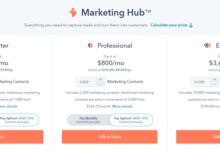
Salesforce CRM Pricing isn’t always optimal. HubSpot Sales Hub Enterprise ($1,200/month for 5 users) bundles CRM, email, meetings, and reporting—no add-ons required. Zoho CRM Plus ($52/user/month) includes telephony, chat, and analytics. Microsoft Dynamics 365 Sales ($95/user/month) integrates natively with Teams, Outlook, and Power BI. For organizations with <100 users, simple sales cycles, and limited customization needs, these alternatives often deliver 30–50% lower TCO over 3 years. As G2’s 2024 CRM Comparison Report concludes: ‘Salesforce leads in scalability and ecosystem depth—but lags in out-of-the-box usability and bundled value for SMBs.’
Proven Negotiation Tactics: What Works (and What Doesn’t) in 2024
Effective Salesforce CRM Pricing negotiation hinges on leverage, timing, and transparency. Tactics that work: (1) Anchor with third-party benchmarks (e.g., 360Factors, Gartner); (2) Bundle multi-cloud commitments (Sales + Service + Marketing + Tableau); (3) Negotiate on annual billing + 3-year term for 25%+ discount; (4) Request free sandbox licenses or Einstein trial periods. Tactics that fail: (1) Asking for ‘the best price’ without data; (2) Negotiating in isolation (not linking to renewal of other cloud services); (3) Accepting ‘no discount’ without escalation to Salesforce’s Global Alliances or Strategic Accounts team. Per Salesforce’s official Negotiation Playbook, 82% of discounts over 20% are approved only at the VP+ level—and require documented business justification.
Future-Proofing: How to Avoid Cost Traps in 2025 and Beyond
Three trends will reshape Salesforce CRM Pricing: (1) AI-as-a-Service—Einstein will shift from per-user to per-prediction or per-conversation pricing; (2) Consolidated Cloud Licensing—Salesforce is testing ‘Cloud Suite’ bundles (Sales + Service + Marketing + Tableau + MuleSoft) at $450/user/month, potentially simplifying—but not cheapening—pricing; (3) Usage-Based Billing Experiments—pilots in APAC and EMEA charge per active user day, not per assigned license. To future-proof: (a) Audit license usage quarterly; (b) Build AI-readiness into your data architecture now; (c) Negotiate ‘price protection’ clauses for 2025–2026 renewals. As Salesforce’s May 2024 Future of CRM Pricing blog states: ‘The era of static, per-user pricing is ending. Flexibility—not just cost—is the new currency.’
Frequently Asked Questions (FAQ)
What is the cheapest Salesforce CRM Pricing option for small businesses?
The cheapest official option is Salesforce Essentials at $25/user/month (billed annually), supporting up to 10 users. However, its lack of workflow automation, sandbox environments, and API access makes it impractical for businesses planning to scale beyond basic contact management. Many small businesses find HubSpot Sales Hub Starter ($45/month for 5 users) or Zoho CRM Standard ($14/user/month) more cost-effective for long-term growth.
Does Salesforce offer nonprofit or education discounts?
Yes—Salesforce.org provides free Power of Us licenses for nonprofits (up to 10 users) and discounted Nonprofit Cloud ($100/user/month). Educational institutions qualify for Education Cloud discounts and free licenses via the Salesforce Education Cloud program. However, these discounts require formal eligibility verification and exclude advanced features like Einstein AI or Shield—requiring separate paid add-ons for full compliance.
How much does Salesforce implementation typically cost?
Implementation costs vary widely: $120,000–$180,000 for a basic Professional deployment (50 users, 3 standard objects); $250,000–$500,000 for Enterprise with CPQ, territory management, or multi-currency; and $750,000+ for global, multi-cloud deployments. According to Panorama Consulting’s 2024 CRM Implementation Cost Report, the average mid-market implementation cost is $342,000—and 71% exceed budget due to scope creep and data migration complexity.
Can I downgrade my Salesforce edition later?
Yes—but with significant restrictions. Downgrades are only allowed at contract renewal (not mid-term), require Salesforce approval, and may trigger data loss if moving from Enterprise (unlimited custom objects) to Professional (250-object limit). Additionally, downgrading eliminates access to features like Apex code or full API access—potentially breaking integrations. Salesforce strongly advises architectural reviews before downgrading.
Is Salesforce CRM Pricing worth it for startups?
For startups with <50 users, simple sales cycles, and limited budget, Salesforce CRM Pricing is often overkill—and overpriced. Alternatives like Close.com ($79/user/month, built for sales teams) or Pipedrive ($14.90/user/month) offer faster time-to-value and lower TCO. However, if the startup plans rapid scaling, complex B2B sales, or global expansion, Salesforce’s ecosystem, scalability, and partner network justify the premium—provided implementation and license management are handled strategically from Day 1.
So—what’s the bottom line on Salesforce CRM Pricing? It’s not just about the sticker price. It’s about understanding the full cost stack: licenses, add-ons, implementation, adoption, compliance, and future AI infrastructure. It’s about negotiating with data—not hope. And it’s about treating Salesforce not as software, but as a strategic, evolving business platform whose true cost reveals itself over 3–5 years—not 30 days. Whether you’re evaluating Essentials or negotiating Unlimited, remember: the most expensive Salesforce deployment isn’t the one with the highest list price—it’s the one built without clarity, control, or continuous cost discipline.
Recommended for you 👇
Further Reading: